Your First Jjimjilbang: A Complete Korean Spa Survival Guide
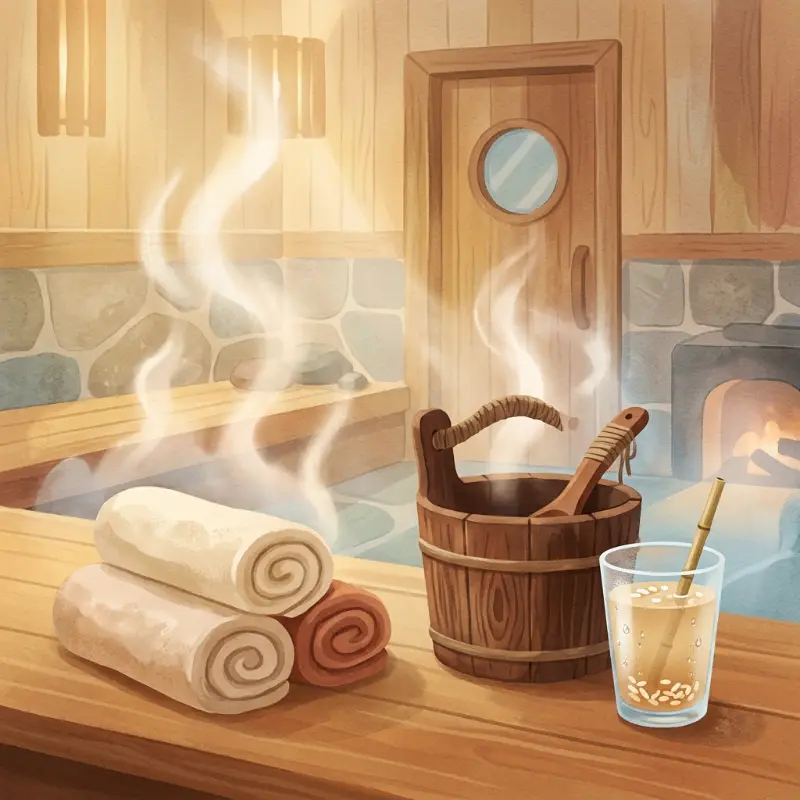
Every K-drama has the scene: characters in matching pajamas, towels folded into little sheep horns on their heads, cracking baked eggs and drinking rice punch in a giant heated hall. That place is a jjimjilbang (찜질방) — part bathhouse, part sauna complex, part sleepover — and it's one of the most Korean experiences money can buy. Usually for less than the price of a movie ticket.
It's also the experience first-timers chicken out of, because of one detail: the bath floors are nude. Here's the honest walkthrough — what happens step by step, what the unwritten rules are, and why, ten minutes in, you'll stop caring completely.
Step by step: from shoe locker to sheep towel
At the entrance you lock up your shoes, pay (typically ₩10,000–20,000 for 12 hours), and get a uniform — shorts and a t-shirt — plus a locker key on a wristband that also works as your wallet inside; everything you buy gets charged to it and settled when you leave.
The building splits in two. The bath floors (목욕탕) are gender-separated and nude: soaking tubs at different temperatures, cold plunges, and scrub stations. The common floor (the actual 찜질방) is co-ed and uniformed: themed sauna rooms — salt, clay, ice — a snack bar, massage chairs, a PC corner, and big heated floors where whole families nap. You move between the two worlds all day.
The rituals: scrub, sikhye, eggs
The legendary upgrade is the body scrub (세신): you lie on a table and a no-nonsense professional in black underwear exfoliates skin you didn't know you had. It costs extra (₩20,000–30,000-ish), feels like being power-washed, and leaves you smoother than you've been since birth. Shower first, soak at least 20 minutes before — softened skin scrubs better.
Then the canon meal: sikhye (식혜, sweet rice punch) and maekbanseok eggs (맥반석 계란) — eggs slow-baked brown in the sauna heat. Crack them on your forehead like the locals do, fold your towel into the sheep-head shape (yangmeori, 양머리), and you have completed the full ceremony.
The unwritten rules (so nobody side-eyes you)
A few norms keep the whole system civilized:
- Shower thoroughly before entering any tub — this is the one absolutely non-negotiable rule
- No phones on the bath floors. None. The common floor is fine
- The small towel stays out of the water; fold it on your head like everyone else
- Tattoos are common enough among young Koreans now that most big-city jjimjilbangs don't blink — but a few traditional places still restrict them; large pieces may draw looks from the ajumma generation
- Sleeping halls are silent zones — snorers self-select to the corners, and so should you
| Korean | Sounds like | Meaning |
|---|---|---|
| 찜질복 주세요 | jjimjilbok juseyo | The spa uniform, please (at the front desk) |
| 수건 하나 더 주세요 | sugeon hana deo juseyo | One more towel, please |
| 세신 얼마예요? | sesin eolmayeyo? | How much is the body scrub? |
| 식혜 하나 주세요 | sikhye hana juseyo | One sikhye, please (charge it to the wristband) |
| 몇 시까지 해요? | myeot sikkaji haeyo? | Until what time are you open? |
Quick tips
- Many jjimjilbangs run 24 hours — an overnight stay costs less than any hotel bed in Seoul, which makes it the classic move for missed trains and red-eye flights.
- Bring: hair ties and a water bottle. Skip: makeup (it's coming off) and valuables beyond the locker.
- Hydrate more than you think you need to — you're sweating in three different rooms before you notice.
- Weekday mornings are quiet and mostly regulars; weekend evenings are the full family-chaos cultural experience. Choose your fighter.
Practice the Korean from this article by typing it — with an AI tutor checking your pronunciation.
Try Tab Hunmin free