Korean Convenience Store Food: What to Actually Eat at CU, GS25 & 7-Eleven
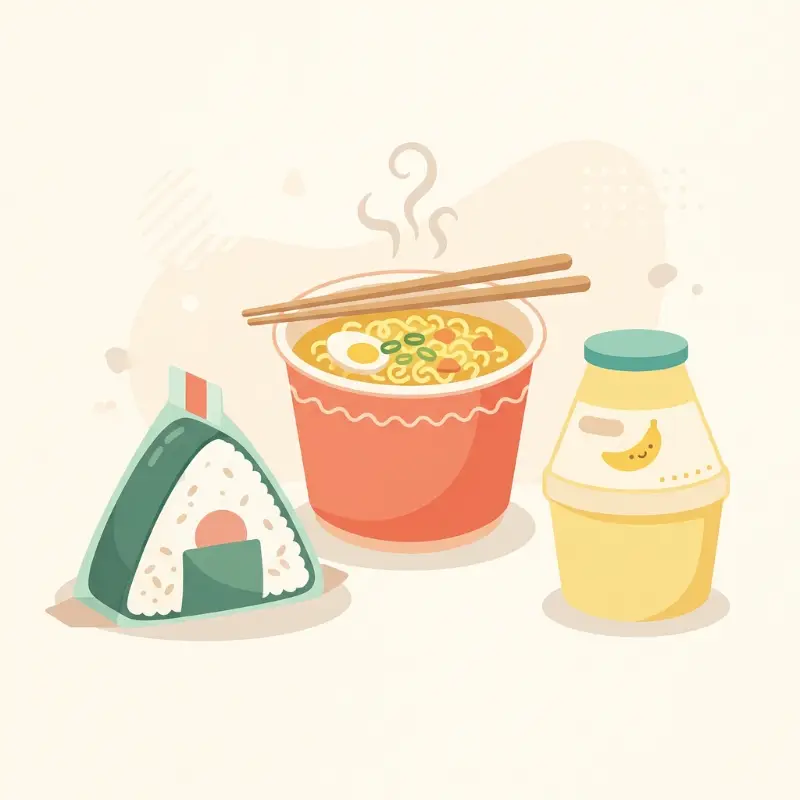
In most countries, convenience store food is what you eat when everything else is closed. In Korea, it's a destination. K-dramas made the late-night CU scene iconic for a reason: the stores are everywhere (there are more convenience stores per person in Korea than almost anywhere on earth), open 24 hours, and half of them have a little table where you can cook and eat what you just bought.
This guide covers what's actually worth eating, how to use the in-store gear like a local — yes, there's a ramyeon machine — and the handful of Korean phrases that make it all smoother.
The hall of fame: what to grab first
Every fan has a personal ranking, but these are the items Koreans and travelers keep coming back to — all under a few thousand won:
- Triangle gimbap (삼각김밥) — tuna mayo is the gateway; the wrapper has a numbered 1-2-3 opening system that everyone fails the first time
- Cup ramyeon + the hot water station — upgrade it with a cheese slice or a triangle gimbap dumped in at the end
- Dosirak (도시락) — full lunch boxes with rice, meat, and sides that put airport food to shame
- Hot bar (핫바) — fish-cake sausage sticks by the register, the classic walking snack
- Banana milk (바나나우유) — the chubby little bottle every K-drama character drinks after a bathhouse scene
- Ice cup + pouch drink combo — grab a cup of ice from the freezer and pour any pouch drink over it; summer survival 101
Use the store like a local: machines, microwaves, eat-in
The magic of Korean convenience stores is that they're half store, half self-service kitchen. Most have a hot water dispenser for ramyeon, a microwave you use yourself, and many have a dedicated ramyeon-cooking machine: put in the pot, press a button, and it boils your instant noodles better than you would. Nobody will show you how — watch the person before you, or just ask.
The eat-in corner (usually a counter by the window, sometimes tables outside) is fair game for anything you bought. On warm nights the outside tables turn into Korea's most casual bar: convenience-store beer, snacks, and people-watching. It even has a name — pyeonmaek (편맥), "convenience store + beer."
Convenience store Korean
Transactions work fine in silence — but these phrases unlock the good stuff:
| Korean | Sounds like | Meaning |
|---|---|---|
| 이거 데워 주세요 | igeo dewo juseyo | Please heat this up (for dosirak — or use the microwave yourself) |
| 젓가락 주세요 | jeotgarak juseyo | Chopsticks, please |
| 이거 1+1이에요? | igeo won peulleoseu won-ieyo? | Is this buy-one-get-one? |
| 라면 기계 어떻게 써요? | ramyeon gigye eotteoke sseoyo? | How do I use the ramyeon machine? |
| 봉투 필요 없어요 | bongtu piryo eopseoyo | I don't need a bag |
| 잘 먹겠습니다! | jal meokgetseumnida! | "I'll eat well!" — say it to your gimbap, it deserves it |
Quick tips
- New items (신상) drop constantly and sell out fast — if a flavor looks limited-edition, it is. Buy it now.
- 1+1 and 2+1 deals change monthly per chain; the tag is on the shelf. Grab both items yourself — the register only charges you for one.
- CU, GS25, 7-Eleven, and emart24 carry different exclusive items — "convenience store hopping" is a legitimate itinerary entry.
- Late-night gold: the dosirak shelf gets discounted stickers near expiry at some branches. Look for the markdown labels.
Practice the Korean from this article by typing it — with an AI tutor checking your pronunciation.
Try Tab Hunmin free